
Uganda’s Anti-Aid Strategy: A Path to Independence or a Prelude to Financial Pressure?
By Angel
Uganda is a country located in East Africa that is rich in natural resources, fertile agricultural land, and untapped economic potential, while also occupying a strategic position within the Great Lakes region through its borders with Kenya, Tanzania, Rwanda, South Sudan, and the Democratic Republic of Congo. Despite its wealth in gold, copper, cobalt, agriculture, and newly discovered oil reserves, the country continues to struggle with poverty, unemployment, weak infrastructure, and deep-rooted governance challenges. This contradiction between abundance and underdevelopment has become central to current debates surrounding Uganda’s growing anti-aid strategy and its quest for economic independence.
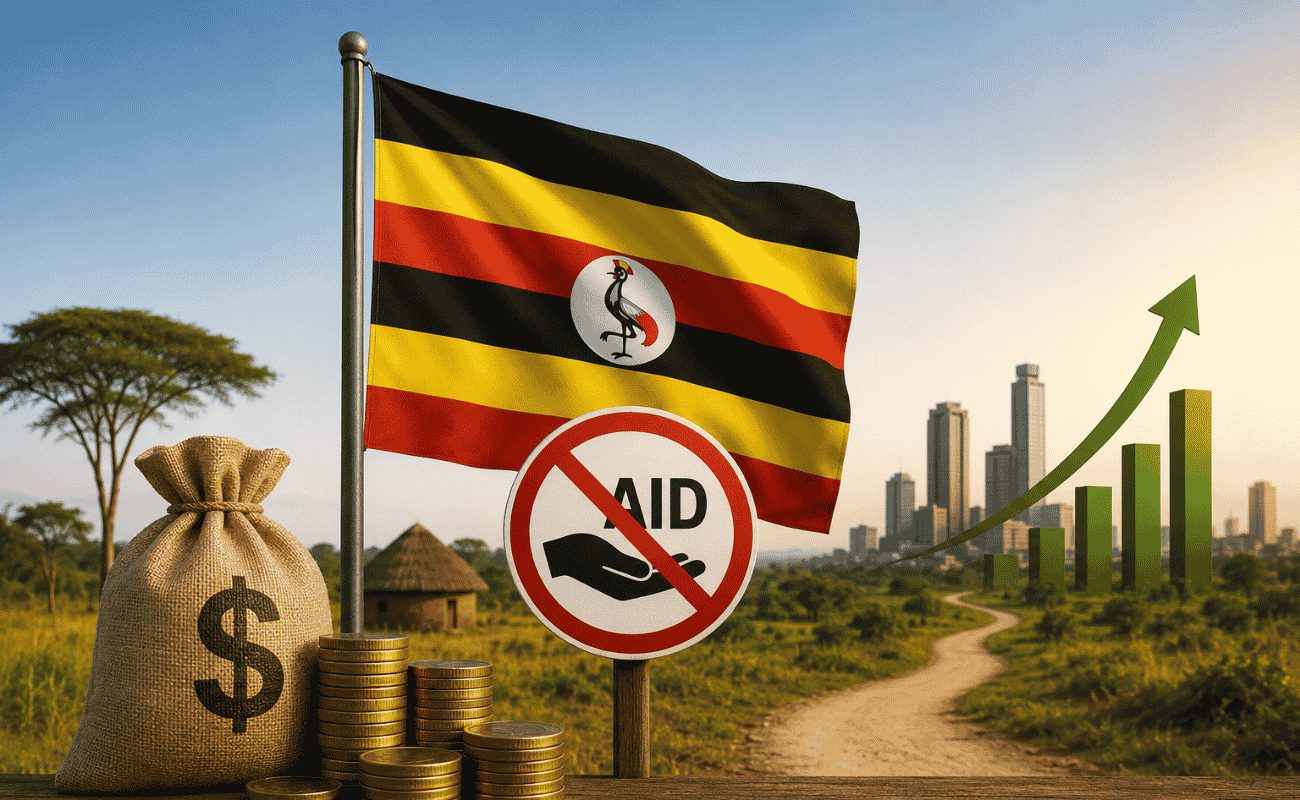
In recent years, Uganda has increasingly projected a political and economic narrative centered on self-reliance and reduced dependence on foreign aid. This anti-aid posture reflects broader debates across Africa concerning sovereignty, economic independence, and the long-term consequences of donor dependency (Moyo, 2009). Yet, beneath the rhetoric lies a complex reality shaped by decades of political continuity, systemic corruption, and uneven development. Uganda’s attempt to position itself as a nation capable of standing independently raises an important question: is this strategy a genuine pathway toward national autonomy, or does it risk deepening existing financial and governance challenges?
Uganda’s economy still relies significantly on external financing for sectors such as healthcare, education, and infrastructure. Sudden reductions in aid could place severe pressure on public services, particularly in rural communities where state capacity remains limited. Recent cuts to foreign assistance under the administration of Donald Trump have likely reinforced Kampala’s concerns about overdependence on external donors, making aid vulnerability a more immediate political and economic issue. However, Uganda’s shift also appears to be internally driven: longstanding frustrations over donor conditionalities, sovereignty concerns, and criticism of governance and human rights practices have shaped anti-aid rhetoric for years. Without substantial reforms aimed at reducing corruption and improving accountability, however, such rhetoric risks becoming more symbolic than practical.
Politically, Uganda operates under a presidential republic system. Executive power is concentrated heavily in the presidency, while the legislature and judiciary have often been criticized for lacking full independence. Since 1986, the country has been led by Yoweri Museveni, making him one of Africa’s longest-serving leaders. Museveni initially came to power after a guerrilla war that promised stability, national unity, and economic reform following years of political turmoil under previous regimes.
At the beginning of his rule, Museveni was praised internationally for restoring a degree of stability and economic growth. Uganda experienced improvements in sectors such as education, healthcare access, and macroeconomic reform during the 1990s and early 2000s. However, nearly four decades later, critics argue that the country has experienced political stagnation rather than meaningful transformation. Constitutional amendments removing presidential term limits and age limits have reinforced perceptions that democratic institutions have gradually weakened in favour of personal rule. One of the most persistent criticisms directed at Uganda’s governance structure is the prevalence of corruption. Transparency concerns have repeatedly emerged in public procurement, government spending, and the management of public resources. Large portions of state revenue and donor funding have allegedly been lost through embezzlement, patronage networks, and administrative inefficiency. While anti-corruption agencies formally exist, enforcement has often appeared selective or politically constrained. Consequently, many Ugandans remain skeptical about whether national wealth is being used for broad public benefit.
This governance context is particularly important when examining Uganda’s anti-aid strategy. The government has increasingly argued that foreign aid creates dependency, undermines sovereignty, and allows external actors excessive influence over domestic affairs. Tensions with Western donors particularly concerning governance, human rights, and controversial legislation have strengthened official calls for economic self-sufficiency (Reuters, 2024). Ugandan leaders have framed aid reduction as a patriotic and strategic move designed to encourage domestic productivity, strengthen taxation systems, and maximize the use of local resources.
The idea itself is not entirely without merit. Economists and political theorists have long debated the negative consequences of prolonged aid dependence. In some cases, aid can discourage domestic revenue generation, weaken accountability between governments and citizens, and create cycles of dependency where states rely more on foreign partners than internal economic structures (Moyo, 2009). Uganda’s emphasis on agriculture, industrialization, regional trade, and oil production suggests an ambition to transition toward a more self-financed economy.
However, the success of such a strategy depends heavily on governance quality and institutional credibility. A nation seeking to reduce foreign aid must possess strong public financial management, transparent leadership, and efficient investment structures capable of converting natural wealth into sustainable development. Uganda’s history raises concerns in this regard. The existence of abundant resources has not automatically translated into widespread prosperity, and fears persist that future oil revenues could deepen elite enrichment rather than national development.
Uganda therefore stands at a crossroads. Its pursuit of economic independence reflects a broader African aspiration to redefine relationships with foreign powers and reclaim greater control over national development. Yet independence cannot be achieved through political rhetoric alone. It requires institutions capable of managing resources responsibly, leadership committed to accountability, and systems designed to serve citizens rather than entrenched political interests.
As Uganda continues to promote its anti-aid strategy, one question remains unavoidable: will Uganda truly be able to hold up its end of the bargain and sustain itself without foreign aid, or will corruption ultimately undermine the vision of national independence and the nation fall back into a system of carrot and stick?
References
Freedom House. (2024). Freedom in the world 2024: Uganda. Freedom House. https://freedomhouse.org/country/uganda/freedom-world/2024
Global Witness. (2023). Uganda’s oil sector and corruption risks. Global Witness. https://www.globalwitness.org
Moyo, D. (2009). Dead aid: Why aid is not working and how there is a better way for Africa. Farrar, Straus and Giroux.
Reuters. (2024). Uganda pushes economic self-reliance amid donor tensions. Reuters. https://www.reuters.com
Transparency International. (2023). Corruption perceptions index 2023. Transparency International. https://www.transparency.org
Tripp, A. M. (2010). Museveni’s Uganda: Paradoxes of power in a hybrid regime. Lynne Rienner Publishers.
World Bank. (2023). Uganda overview. World Bank. https://www.worldbank.org/en/country/uganda/overview