
THE RISE OF YOUTH-LED PEACE INITIATIVES IN AFRICA- HOW YOUNG AFRICANS ARE WORKING TO PREVENT LOCAL CONFLICTS
By Esther Oniseitan
There have been significant changes across Africa, and Africa’s teeming youth remain at the forefront of these changes. Africa has the youngest population in the world, with over 60% of its population under the age of 25. This demographic reality is shaping not just the continent’s future but also how peace and conflict are managed today.
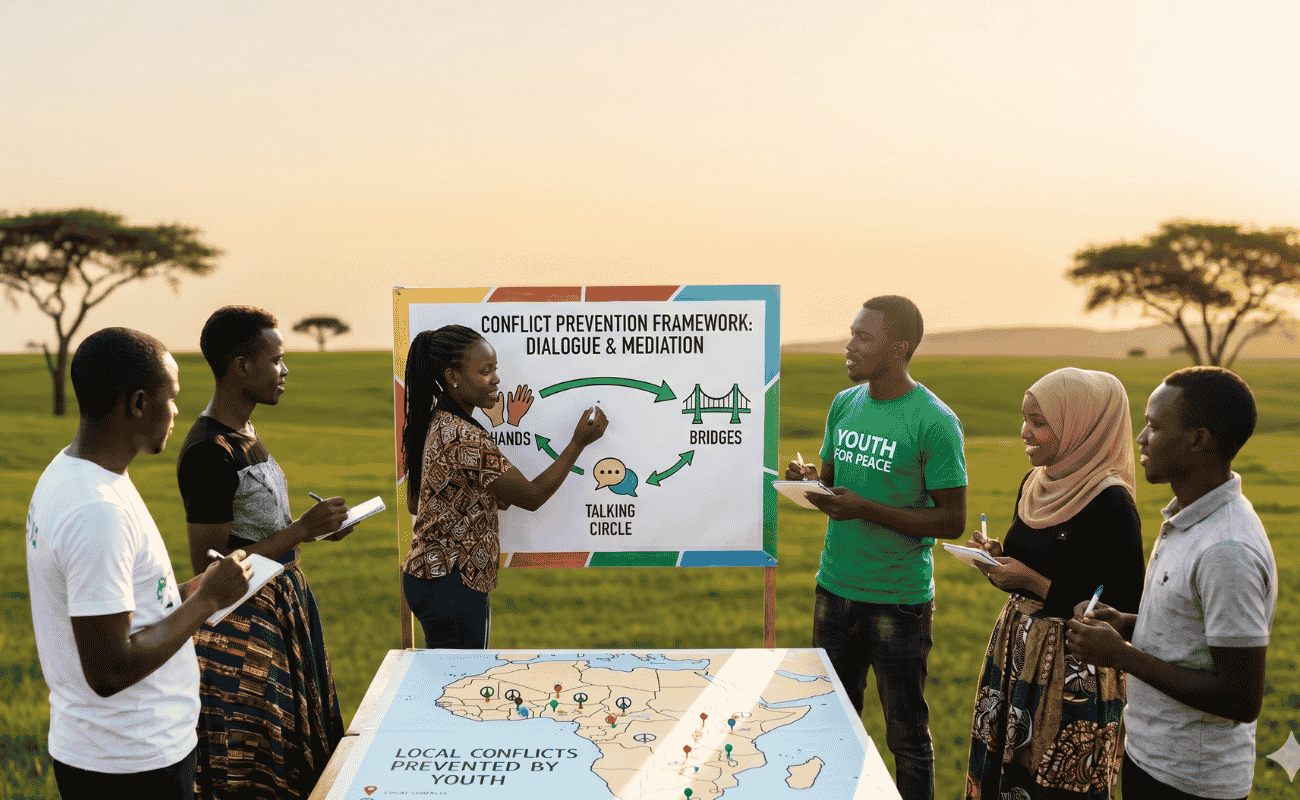
Young people aren’t just sitting back, waiting for governments or international groups to step in and fix conflicts anymore. They’re jumping in themselves, becoming peacebuilders right in their own neighborhoods. Whether it’s settling disputes at the grassroots, launching creative digital campaigns, or just gathering people to talk things out, youth-led efforts are starting to shift the entire landscape of peacebuilding on the continent.
Conflict isn’t new in Africa. In fact, an estimated 121 million young Africans are not in employment, education, or training, highlighting the scale of vulnerability across the continent. In West Africa, you see clashes between herders and farmers putting places like Nigeria’s middle belt, as well as parts of Mali, and Burkina Faso on edge. In East Africa, tension builds every election season, especially in Kenya and Uganda. And the Sahel, extremist groups, people being forced from their homes, deep humanitarian challenges are dominant.
Governments and international groups like the African Union and the UN do try to keep things under control, but they don’t always move fast enough or understand local realities. Bureaucracy slows them down, and sometimes their solutions don’t fit. That’s where young people see an opening. They live these realities daily, and they seem to “get” what outsiders might not.
The African Union has also institutionalized youth participation through structures such as the Office of the African Union Youth Envoy, which ensures that young Africans are represented in high-level decision-making and policy processes.
In addition, the Africa Youth Reference Committee, composed of young representatives across regions, was created to integrate youth voices into Agenda 2063 and global development frameworks.
In Nigeria, young people are leading organizations that sit down with farmers and herders before tensions escalate. Groups like Building Blocks for Peace Foundation work at the grassroots level, organizing town halls, workshops, and dialogue sessions that bring conflicting communities together. Since its founding, the organization has focused on using youth engagement, advocacy, and community dialogue to prevent violence and promote peaceful coexistence.
Similarly, the Initiative for Peacebuilding, Security and Youth Engagement in Nigeria runs community mediation programmes across all 36 states, facilitating dialogue, promoting security awareness, and equipping young people with skills to manage conflicts before they escalate.
In conflict-prone areas like Plateau State, youth-led organizations such as Youth Initiative Against Violence and Human Rights Abuse have gone further bringing farmers and herders together through interfaith dialogue, joint community projects, and even cooperative farming initiatives that rebuild trust and shared livelihoods.
These organizations don’t just resolve disputes; they also promote resource-sharing, social cohesion, and long-term peacebuilding, while leveraging social media and community networks to expand their reach and inspire wider participation.
Kenya has seen something similar. Young leaders use school programs, workshops, and online platforms to bridge old divides. They bring together youth and adults alike, encouraging empathy, dialogue, and ways to disagree without violence.
And in the Sahel, technology has become a secret weapon. Young innovators are making apps and online platforms where people can flag signs of trouble before things escalate. These tools connect communities with local authorities or NGOs super quickly, which is a gamechanger in places where traditional leaders or institutions don’t always reach.
But these efforts go deeper than just calming down conflicts. A lot of youth-led projects are targeting the root problems poverty, joblessness, getting left out of decisions. You’ll find youth organizations teaching entrepreneurship, pushing for civic action, and training new leaders. The idea? Give young people real opportunities, and there’s less pull toward violence or extremist groups.
It’s not just rural or conflict-riddled areas, either. In Southern Africa, especially South Africa and Zimbabwe, young peacebuilders work with students to keep campus protests peaceful while still letting voices be heard. It shows how flexible and wide-reaching this work has become. Beyond institutional frameworks, youth-led networks are driving peacebuilding efforts on the ground. For example, the African Coalition on Youth Peace and Security coordinates youth organizations across the continent, advocating for stronger youth inclusion in peace and security policies.
Similarly, the African Youth Advocacy Team brings together young peacebuilders to influence policy at both the African Union and global levels, ensuring that grassroots experiences inform decision-making.
And you can see results. Communities with active youth peace teams often see less violence and more trust between people and between citizens and their leaders. Policymakers are noticing, too. Places like the African Union are starting to include youth voices when they talk peace and security
Policymakers are beginning to take notice. Institutions like the African Union and the United Nations are increasingly creating formal spaces for young people in peace and security discussions, recognizing them not just as beneficiaries, but as key actors in conflict prevention and resolution.
At the continental level, the African Union has embedded youth participation through initiatives such as the Youth for Peace Africa Programme, which supports young peacebuilders across the continent and integrates them into policy processes. The AU has also strengthened representation through the Office of the AU Youth Envoy and the Africa Youth Reference Committee, both of which ensure that youth perspectives are reflected in Agenda 2063 and peace and security frameworks.
Similarly, the United Nations has advanced youth inclusion through its global Youth, Peace and Security (YPS) agenda, formalized by UN Security Council Resolution 2250. This framework recognizes young people as essential partners in peacebuilding and calls for their active participation in decision-making. To support this, platforms like the UNOY (United Network of Young Peacebuilders) and the Africa Youth Voices Network connect youth-led organizations to global policy spaces, ensuring that grassroots experiences shape international responses.
Of course, these groups don’t have it easy. Many scrape by with very little funding, and sometimes they face politicians or authorities who’d rather not listen. Some youth peacebuilders put themselves at real risk, especially in dangerous regions. And when the money dries up, a lot of great programs disappear.
Yet even with all the hurdles, Africa’s young peace builders keep going. Their drive, fresh ideas, and deep ties to their communities make everything more real and more effective.
Backing youth-led peace initiatives isn’t just about helping the next generation, it’s about building a stronger, more stable Africa. Governments, non-profits, and international bodies should put resources, training, and power behind these efforts. With the right support, small neighborhood wins can scale up and last.
Young people in Africa aren’t just watching conflict happen; they’re rolling up their sleeves and shaping what peace looks like. This is bigger than a temporary trend. If we take it seriously and help it grow, youth-led peacebuilding could change not only how Africa responds to conflict, but how the continent prevents it in the first place.