
Climate Change and Conflict in Africa: How Environmental Stress Fuels Insecurity
By Esther Oniseitan
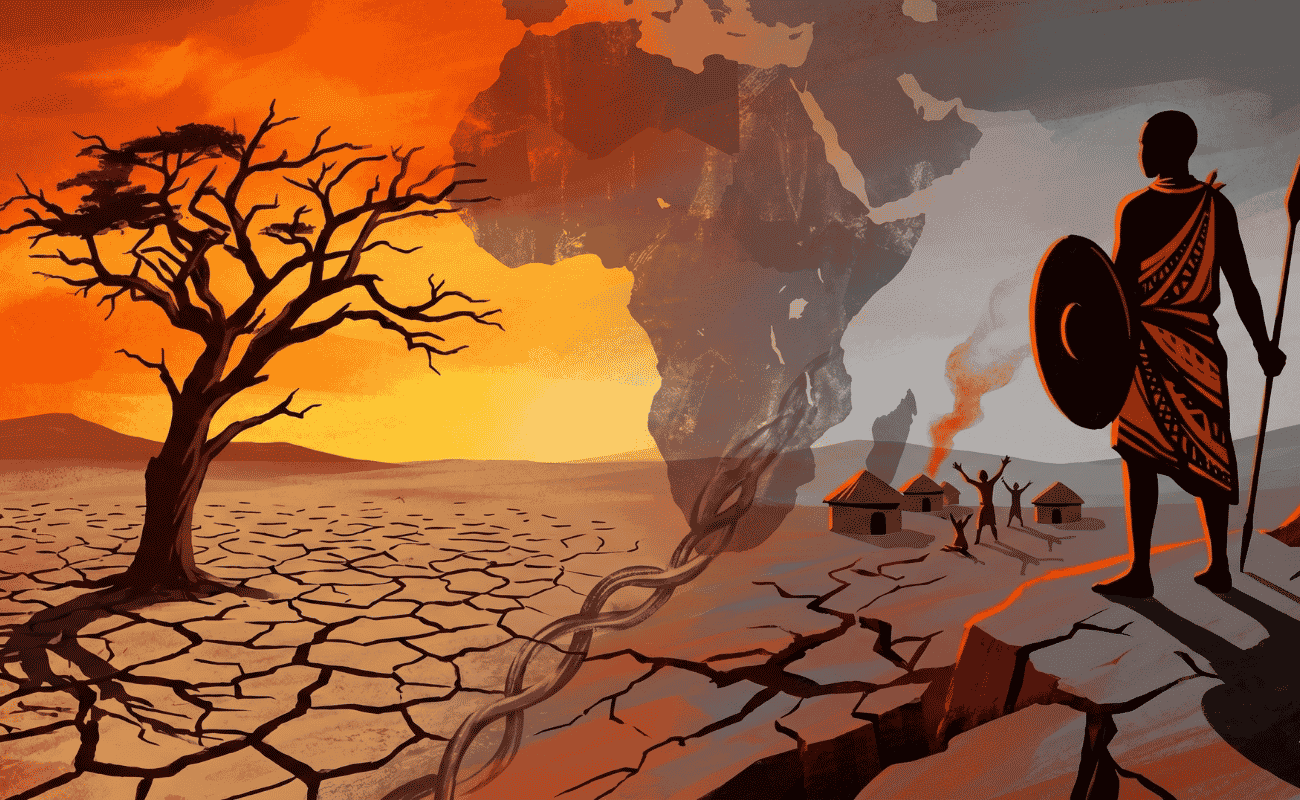
Climate change has become one of the most pressing security challenges facing Africa today. Although the continent contributes the least to global carbon emissions, it remains one of the regions most vulnerable to the effects of rising temperatures, desertification, droughts, flooding, and environmental degradation. Across the Sahel, the Horn of Africa, the Lake Chad Basin, and parts of Southern Africa, climate change is intensifying existing social, political, and economic tensions, creating conditions that fuel instability and violent conflict. Increasingly, environmental stress is no longer viewed solely as an ecological concern, but as a major driver of insecurity, displacement, and humanitarian crises across the continent.
Climate change acts as what security experts describe as a “threat multiplier.” It does not directly cause war or violence, but it worsens already fragile conditions such as poverty, unemployment, weak governance, and competition over scarce resources. In many African countries where agriculture and livestock remain central to economic survival, changing weather patterns and environmental decline have devastating consequences for livelihoods. According to the African Development Bank, agriculture employs more than 60 percent of Africa’s workforce, making millions of people highly dependent on stable environmental conditions for survival Where are jobs for African youth? In agri-business!
One of the clearest examples of the relationship between climate change and insecurity can be seen in the Sahel region. Countries such as Mali, Burkina Faso, Niger, and Chad have experienced severe droughts, declining rainfall, and expanding desertification over the past few decades. As grazing land and water sources become scarce, tensions between farmers and pastoralists have intensified. Traditional migration routes used by herders are increasingly obstructed by expanding agricultural settlements, resulting in violent clashes over land and access to water. In many cases, these local conflicts have evolved into broader security crises involving ethnic divisions and armed violence.
The shrinking of Lake Chad also demonstrates how environmental degradation can destabilize entire regions. Once one of Africa’s largest freshwater lakes, Lake Chad has dramatically reduced in size due to climate variability, poor water management, and overuse. Millions of people in Nigeria, Niger, Chad, and Cameroon who depended on the lake for fishing, farming, and livestock have lost their means of livelihood. The resulting poverty and displacement have contributed to instability and created opportunities for extremist groups such as Boko Haram to recruit vulnerable populations.
Nigeria itself provides a strong example of how environmental stress can fuel internal insecurity. In the northern part of the country, increasing desertification and drought have forced many herders to migrate southward in search of water and grazing land. This migration has intensified competition with farming communities in the Middle Belt and southern regions, leading to deadly farmer-herder clashes. While these conflicts are often framed through ethnic or religious narratives, environmental pressure remains a major underlying factor. Weak land governance, population growth, and the widespread availability of small arms have further worsened the violence. According to the international Crisis Group, clashes between farmers and herders in Nigeria have become one of the country’s deadliest security challenges in recent years Ending Nigeria’s Herder-Farmer Crisis: The Livestock Reform Plan | International Crisis Group.
Climate change is also driving displacement and food insecurity across Africa. In East Africa, prolonged droughts have devastated crops and livestock, leaving millions vulnerable to hunger and malnutrition. Countries such as Somalia, Ethiopia, and Kenya continue to face severe humanitarian crises linked to failed rainy seasons and worsening climate conditions. Flooding in Sudan, Mozambique, and South Sudan has similarly displaced thousands of people, destroyed infrastructure, and weakened local economies. According to the United Nations High Commissioner For Refugees(UNHCR), climate-related disasters are increasingly contributing to forced migration and displacement across Africa. https://www.unhcr.org/media/no-escape-frontlines-climate-change-conflict-and-forced-displacement
The security implications of climate-induced displacement are significant. As people migrate in search of food, water, and economic opportunities, pressure on urban centres and host communities increases. Competition over jobs, housing, and public services can generate social tensions and deepen instability. In regions where governments are already struggling to provide basic services, large-scale displacement can overwhelm state capacity and create conditions for unrest. The United Nations has repeatedly warned that climate change could become one of the defining drivers of conflict and migration in the twenty-first century.
Despite these growing threats, many African governments continue to face major challenges in responding effectively to climate-related insecurity. Weak institutions, inadequate infrastructure, corruption, and limited financial resources often undermine adaptation efforts. Although Africa contributes minimally to global greenhouse gas emissions, the continent receives only a small share of global climate finance needed for resilience and adaptation projects. This imbalance has intensified calls for climate justice and greater international support for African countries facing the harshest impacts of climate change.
Regional organizations such as the African Union and ECOWAS have increasingly acknowledged the relationship between climate change and security. However, addressing the crisis requires more than military responses. Sustainable solutions must include investments in climate adaptation, renewable energy, sustainable agriculture, water management, and conflict-resolution mechanisms. Strengthening governance systems and supporting community-based peacebuilding initiatives are equally important in reducing tensions linked to environmental stress.
Young people also play a critical role in Africa’s climate-security future. With Africa having one of the youngest populations in the world, youth unemployment and economic exclusion create vulnerabilities that extremist groups and criminal networks can exploit. Expanding access to education, green jobs, and climate-resilient economic opportunities will therefore be essential for long-term peace and stability.
Ultimately, climate change is reshaping Africa’s security landscape in profound ways. Environmental stress is deepening competition over resources, intensifying displacement, weakening livelihoods, and fueling violence across multiple regions of the continent. While climate change may not directly cause conflict, it amplifies existing vulnerabilities that make insecurity more likely. Addressing the intersection between climate change and conflict will require coordinated action from African governments, regional organizations, civil society, and the international community. Without urgent and sustained intervention, environmental insecurity could undermine development and stability across Africa for decades to come.