
The Outcome of the CACD National Dialogue: Nigeria’s Solutions Are on the Table, Now What?
By Assam Francis
On the morning of 18 February 2026, I walked into the Institute for Peace and Conflict Resolution (IPCR) in Abuja with a very different kind of nervousness. Not the kind that comes from attending an event as an outsider hoping to take notes, but the kind that comes from being one of the people responsible for making sure the event works. As part of the organising team behind the National Youth Leadership and Policy Building Dialogue, I had spent weeks in speaker coordination, and programme design. By the time the hall filled up, I had already seen the agenda more times than I could count. Yet what unfolded that day still moved me in ways I did not fully expect. It was a forceful reminder that so many of the solutions to Nigeria’s most stubborn problems are not missing. They are already on the table. What is missing is the political will to implement them.
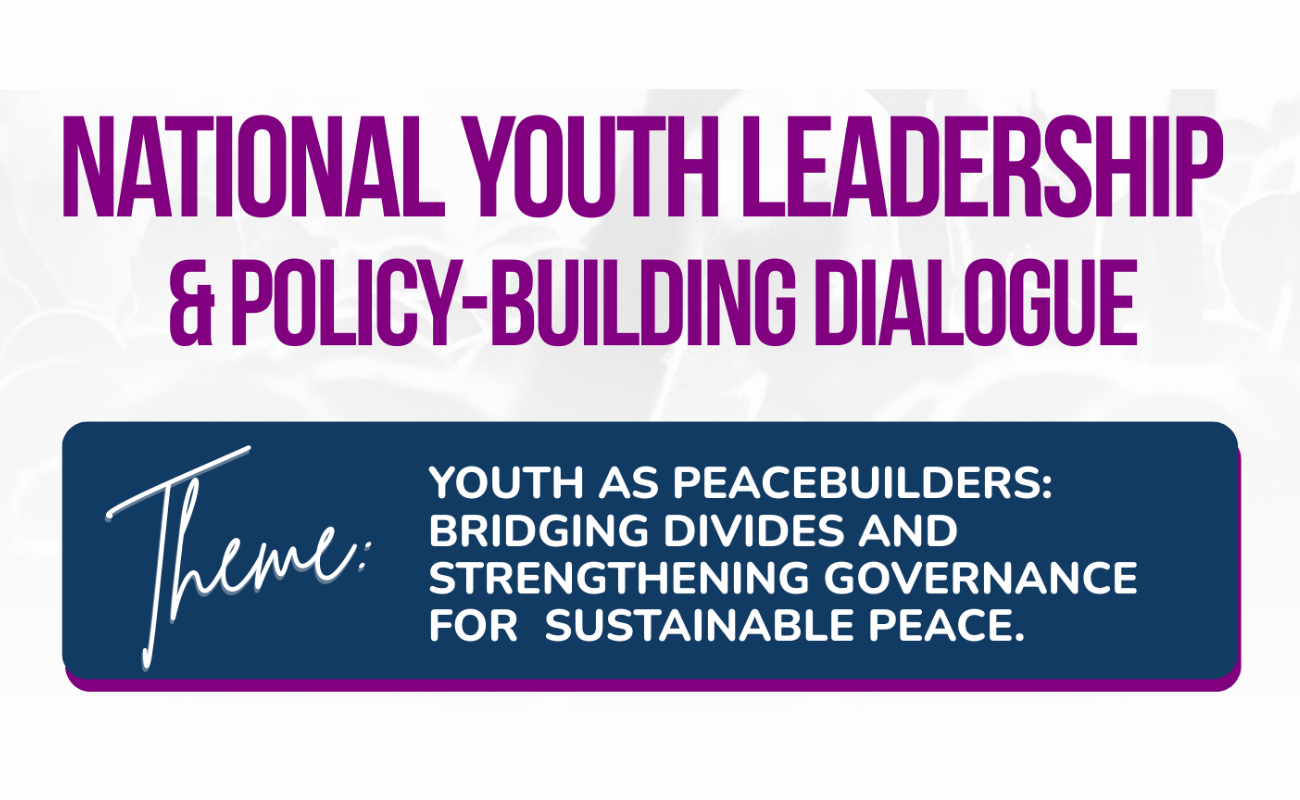
The event was organised by the Centre for African Conflict and Development (CACD), in partnership with the Institute for Peace and Conflict Resolution and was themed Youth as Peacebuilders: Bridging Divides and Strengthening Governance for Sustainable Peace. The hall was packed with young people, civil society leaders, security experts, seasoned journalists, peacebuilding practitioners, development partners, and a cross-generational cast of Nigerians who, for one afternoon, refused to talk past each other. If you have been feeling hopeless about this country lately, you needed to be in that room.
The Dialogue was structured around three pillars that I would describe as the holy trinity of Nigeria’s dysfunction: Peace and Security, Inter-ethnic Relations, and Governance. These are not new topics. We have been talking about them for decades. But what made this event different, at least in my view, was that it refused to treat these issues as abstract problems to be studied. It treated them as emergencies demanding specific, actionable responses from identifiable people with the power to act. That framing alone set a different tone from the moment the opening remarks began.
Dr. Michael Nwankpa, Director of CACD, set that tone clearly. He described the Dialogue as a response to what he called an “African Spring”, a continent-wide surge of youth-driven civic energy that, without proper channels, too often boils over into protests, insurgencies, and the kind of frustration that makes military coups look attractive to a desperate generation. He was right to name it. We have watched it happen in Mali, Burkina Faso, Niger, and Guinea. We have seen the whispers of it at home during #EndSARS and #EndBadGovernance. Nigeria has so far avoided going off the edge, but the conditions that pushed other countries over it are very much present here. Dr. Nwankpa’s argument was simple and devastating: lasting solutions must come from within, and Nigerian youth are indispensable to that process. I left the opening address with the uncomfortable feeling that we have been wasting this generation.
The panel sessions were, for me, the heart of the day. The Interactive Youth Panel brought together voices I found genuinely refreshing, not because they said what we wanted to hear, but because they were willing to say what we needed to hear. Jennifer Ajoke Serrano of Unity Projects Nigeria, drawing on seven years of work across thirty states, made a point that I keep returning to: Nigeria’s inter-ethnic tension is not caused by our diversity. It is caused by poverty and inadequate education, and ethnic and religious identity are simply the tools that political elites use to exploit those conditions. She made the case plainly that when people share a common interest, identity lines have a way of dissolving entirely, and the moment that interest disappears, so does the brotherhood. That observation alone should tell us everything about how manufactured many of our so-called dividing lines really are.
The Cross-Generational Panel was equally striking, though in a different way. Kemi Okenyodo challenged the popular narrative that the older generation has simply failed Nigerian youth. She reminded us that democracy was not handed to this country as a gift. It was won at great personal cost by people who marched, were jailed, and in some cases never came home. That history matters, and young Nigerians who dismiss it are cutting themselves off from the foundation on which they now stand. Jaye Gaskiya took it further, arguing that every generation must find its own mission, and that the real crisis is not the absence of youth ambition but the destruction of the institutional spaces such as student unions, civic organisations, and youth councils through which previous generations were forged into leaders. Those spaces have been captured, underfunded, or corrupted. Rebuilding them is not a favour to the young. It is a national security investment.
A few of the recommendations that emerged from the Dialogue struck me as particularly urgent. The call to reform the Not-Too-Young-To-Run Act with legislation that caps party nomination fees for candidates below 35 is one that should have happened years ago. The idea of a Public Officials Education Accountability Act, requiring elected officials and senior appointees to enroll their children in public schools, is the kind of structural reform that would force Nigeria’s governing class to have a personal stake in fixing public education overnight. And the recommendation for a unified national youth coalition, a coordinated body of millions of young Nigerians with shared policy priorities and a common accountability framework, is perhaps the most important of all. Fragmented voices are easy to ignore. A coordinated movement is not.
I left the IPCR that afternoon convinced of two things. The first is that this Dialogue was exactly the kind of event Nigeria needs more of, not as a performance of inclusion, but as a genuine mechanism for converting youth energy and expertise into policy. The second is that its value depends entirely on what happens next. Ideas without implementation are just ideas.
With 2027 approaching faster than most politicians would like to admit, the urgency of this conversation has a deadline attached to it. The solutions are on the table. The youth are ready. The question now is whether Nigeria’s institutions, its older leadership, and its young people themselves will choose to act with the seriousness this moment demands, or whether we will settle, once again, for a beautiful event and a forgotten report. I, for one, refuse to accept the latter.