
Africa’s 2025 Coup Wave: What It Means for Democracy
By Oluwaseun Taiwo
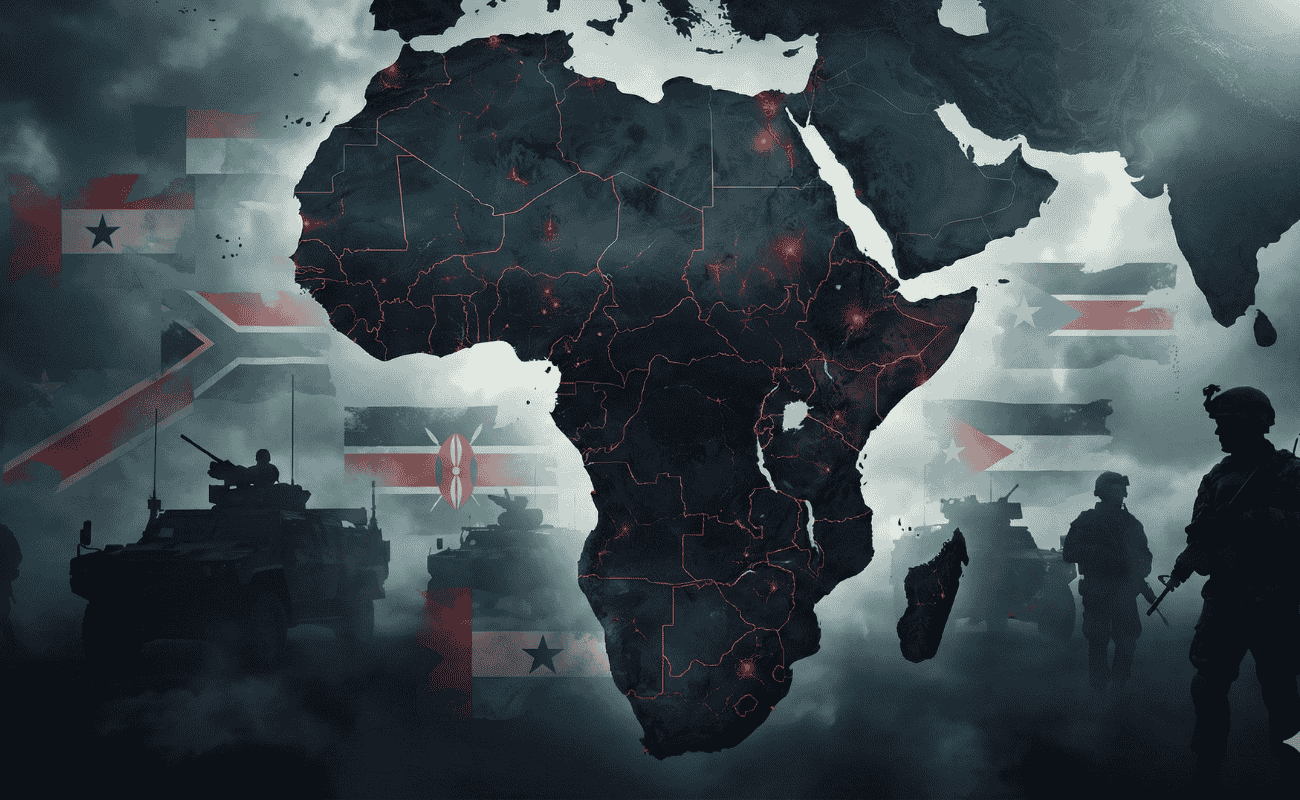
As 2025 winds down, it is hard to ignore how deeply military coups and attempted takeovers have shaped Africa’s political landscape. What used to feel like shocks have started to resemble a pattern, stretching from the Sahel to the Gulf of Guinea and even into countries once seen as democratic anchors. This year alone delivered fresh attempts, new confrontations, and a reminder that many African states are still struggling to contain the pressures building underneath their political systems.
The most dramatic incident was the attempted coup in Benin in early December. Some soldiers briefly seized state television, announced the suspension of the constitution and claimed to have removed the president. They accused the government of neglecting security challenges and ignoring the sacrifices of the military, especially as violence in the north has escalated. Their momentum didn’t last. Soldiers, loyal to the President, moved quickly, retook institutions and arrested the plotters within hours. It was a close call, and the fact that it happened in Benin long held up as a stable democracy says more about the region than the soldiers themselves.
Benin wasn’t alone. Across the continent, 2025 saw several attempted coups, plots, and tense standoffs. Some never made international headlines; others were disrupted quietly behind the scenes. These events followed the lingering instability in countries such as Burkina Faso, Mali, Niger, Guinea, and Sudan, where transitions to civilian rule remain uncertain. Each case has its own triggers, but the broader conditions of weak institutions, contested elections, economic pressures, widening inequality, and rising insecurity cut across borders.
One theme ran through almost every incident this year: the influence of security threats. The spread of insurgencies from the Sahel continues to shake governments from Senegal to northern Ghana. When soldiers are overstretched, underpaid, or feel abandoned, the temptation to reset the system grows. Coups often feed on a sense of crisis. Once officers believe the political class cannot solve the country’s problems, the door opens dangerous ideas about military coups. That sentiment surfaced clearly in Benin, where the plotters framed themselves as responding to insecurity and the state’s alleged failures.
Regional bodies responded swiftly. ECOWAS, under pressure after years of criticism for being too soft or too divided, condemned the attempted takeover in Benin and called for respect for constitutional order. The African Union repeated its zero-tolerance stance, warning that the continent cannot afford further democratic backsliding. These reactions mattered. Even if ECOWAS has struggled in places like Niger, its immediate response in Benin helped reinforce the idea that coups are neither normal nor acceptable. At a time when many West Africans are losing faith in regional institutions, this was one moment when they acted with clarity.
Still, we can’t pretend the broader trend is slowing. The question many are now asking quietly in policy circles and loudly on social media
is whether the continent is entering a new era of military rule. Is democracy weakening? And if so, why?
The answer isn’t simple. Africa is not turning its back on democracy. What’s happening is more complex. Citizens still want accountable government, but many feel their leaders have not delivered security, jobs, or fairness. When democratic systems seem unresponsive, some people start viewing soldiers as an alternative, even if history shows that military regimes rarely solve the problems they promise to fix. Military rule often replaces one crisis with another: restricted civic spaces, poor governance, weakened institutions, and delayed transitions. No country has developed sustainably under repeated coups.
Yet, dismissing public frustration would also be a mistake. Many African countries are dealing with long-standing issues of corruption, inequality, exclusion, slow justice systems, and economic hardship. When these combine with contested elections or leaders who appear to bend constitutional rules, trust collapses. That collapse creates a space where coups thrive.
The events of 2025 highlight three things. First, no country is fully insulated. Even those with strong democratic histories can suddenly find themselves vulnerable if political tensions and security pressures collide. Benin’s experience proves that. Second, regional institutions still matter. Their early engagement this year prevented at least one attempted takeover from spiraling into a full breakdown. And third, the threat of future coups isn’t going away unless governments confront the root causes: weak oversight over the military, lack of economic opportunity, and political systems that many citizens feel shut out from.
There’s also a deeper discussion emerging about whether the model of democracy being practiced is delivering enough. Some analysts argue for reforms that strengthen local governance and reduce the overwhelming concentration of power at the presidential level. Others point to the need for better-managed transitions, stronger legislatures, and genuine investment in civic education. The point is simple:
Democracy cannot survive elections alone. It needs institutions that people trust.
As 2025 ends, the continent sits at a crossroads. Africa’s coups are not just military events; they are political signals. They reveal where states are fragile, where citizens feel unheard, and where institutions are struggling to keep up with the demands of fast-changing societies. But they also show that resistance to unconstitutional rule is still strong from civil society, from parts of the military, and from regional organizations that refuse to normalize military takeovers.
The challenge for 2026 and beyond is whether governments can learn from this year’s warnings. If they reinforce democratic institutions, address insecurity with seriousness, and make political systems more inclusive, the cycle can be broken. If not, the conditions that are driving coups will remain in place.
Africa is not destined for military rule. But democracy on the continent needs attention, humility, and genuine reform. The events of 2025 have made that clearer than ever.