
Africa 2026: Elections, Power, and the Future of Democratic Growth
By Oluwaseun Taiwo
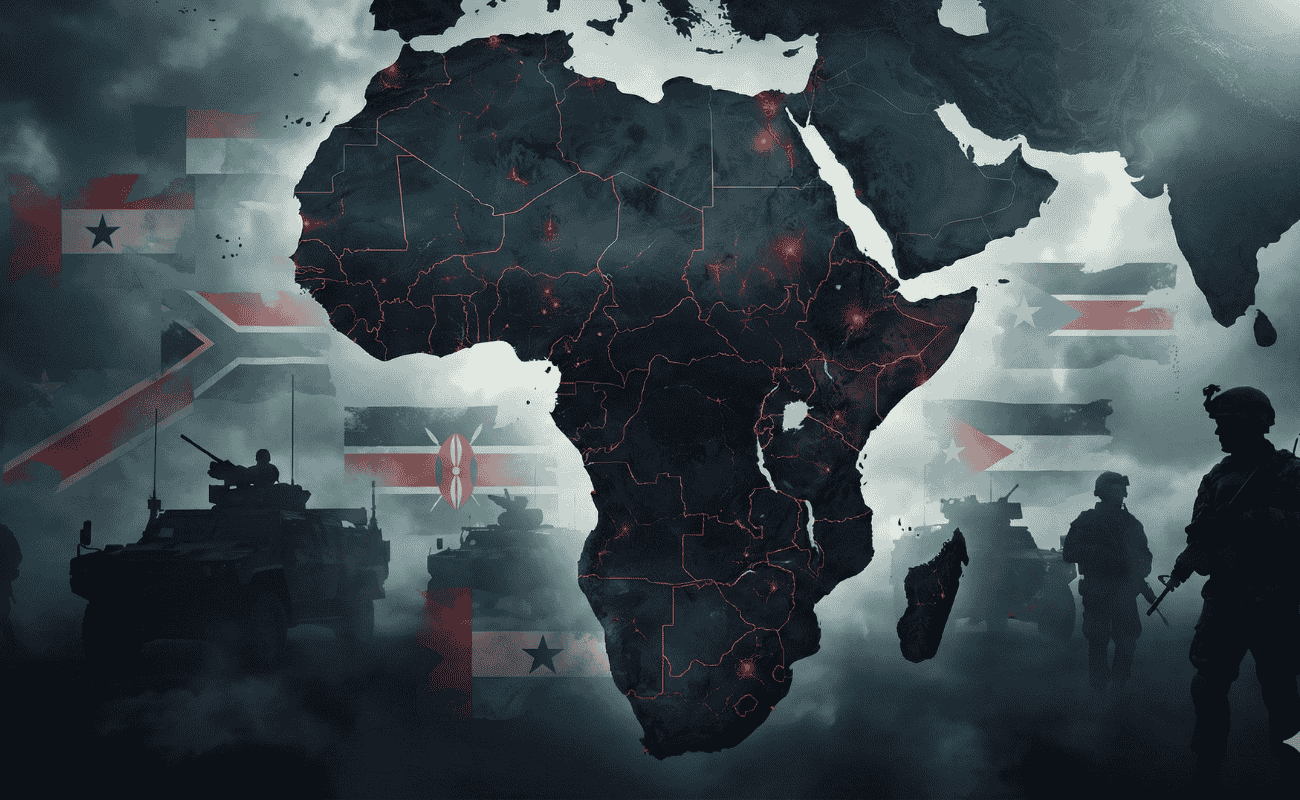
As Africa enters 2026, the continent’s political calendar is shaping up to be less a moment of renewal and more a test of democratic endurance. Scheduled elections, prolonged leadership tenures, youth mobilisation, economic strain, and unresolved security crises are set to converge in ways that will expose the limits of existing political arrangements. The year ahead is unlikely to be defined simply by ballots cast or offices filled, but by a deeper contest over legitimacy, authority, and the meaning of democratic rule in African states.
The significance of 2026 lies not in what has already occurred, but in what upcoming elections are expected to reveal. Across the continent, democratic growth has remained uneven, often confined to the mechanics of voting while deeper institutional accountability lags. Elections continue to be organised regularly, yet the political conditions under which they take place raise questions about whether they still function as mechanisms for change or have increasingly become tools for managing public pressure.
Leadership longevity remains one of the clearest sources of political tension in the year ahead. In several countries, power continues to be held by leaders who have governed for decades, often through constitutional amendments, tightly managed elections, or the steady weakening of opposition space. As 2026 unfolds, this concentration of authority is unlikely to generate stability. Instead, it is expected to intensify political fatigue. For many citizens, prolonged rules are no longer interpreted as experience, but as stagnation, and this perception will shape how upcoming elections are received and contested.
Uganda’s general election, held in January 2026, has reinforced long-standing questions about the state of political competition in the country. President Yoweri Museveni was returned as winner, extending his decades-long hold on power, but the result did little to settle debates about legitimacy. As in previous cycles, the campaign and voting period were marked by restrictions on opposition activity, pressure on independent media, and the visible presence of security forces. Rather than opening political space or renewing public confidence, the election has deepened concerns that electoral processes are increasingly producing resignation rather than trust. The central issue emerging from the 2026 contest is not simply continuity in leadership, but whether elections in Uganda can still function as a credible mechanism for accountability and democratic choice
Zambia’s general election, expected in August 2026, offers a different but equally instructive case. Following the 2021 transition that brought Hakainde Hichilema to power, Zambia has been framed as a democratic recovery story. The 2026 vote will test whether that recovery has been translated into institutional resilience or whether reform momentum has stalled under economic strain and rising public expectations. For policymakers, Zambia represents a reminder that democratic openings require sustained political will, not just electoral turnover.
In West Africa, Benin’s presidential election in April 2026 will be another critical moment. Once regarded as a model of democratic stability, Benin has seen its political space narrow through electoral reforms that limited opposition participation and weakened competitive politics. The 2026 election will likely indicate whether this trajectory continues toward controlled pluralism or whether there is room for restoring broader political inclusion. The outcome and conduct of the process will carry regional significance at a time when West Africa is already grappling with coups, democratic backsliding, and weakened civilian rule.
Elsewhere, elections are expected in countries such as the Republic of Congo and the Comoros, which will take place in contexts where incumbency power is deeply entrenched, and opposition capacity remains limited. While these contests may appear predictable, they are unlikely to be politically inconsequential. Even elections with limited competitiveness can generate unrest when citizens perceive them as confirmations of existing power rather than genuine choices. In such settings, elections risk accelerating disengagement rather than reinforcing democratic norms.
At the same time, Africa’s democratic outlook in 2026 will be shaped as much by absence as by presence. Several states currently under military rule, including Mali, Burkina Faso, and Niger, remain outside regular electoral timelines. Promised transitions to civilian rule continue to shift, raising doubts about whether future elections will restore constitutional order or merely legitimise new forms of authoritarian governance. This prolonged uncertainty is expected to weaken regional democratic standards and complicate collective responses from continental institutions.
Security concerns will continue to exert a decisive influence on political life. In large parts of the Sahel, the Horn of Africa, and Central Africa, governments operate under persistent threats from insurgent groups, criminal networks, and communal violence. While these threats are real, they are increasingly used to justify long-term emergency governance and restrictions on political space. In 2026, the tension between security and democratic participation is likely to deepen, as citizens grow less willing to accept indefinite limitations on rights in the name of stability.
Economic pressure will further intensify these political strains. Rising living costs, debt obligations, and constrained fiscal space are expected to limit governments’ ability to deliver tangible improvements in daily life. For young people, the implications are particularly severe. Africa’s demographic reality means that millions of young citizens will enter political adulthood in 2026 without access to stable employment or credible pathways to influence. This widening gap between political inclusion and economic opportunity represents one of the most serious challenges to democratic growth.
Youth activism is therefore likely to remain central to political contestation in the year ahead. Digital platforms have already transformed how grievances circulate, protests mobilise, and state actions are scrutinised. Many youth-led movements are expected to continue rejecting traditional party structures, viewing them as extensions of elite systems that have failed to deliver change. This shift challenges policymakers who still define democratic participation narrowly through formal institutions while overlooking emerging forms of political engagement.
Accountability will remain a contested pillar of democratic development. Although anti-corruption rhetoric is widespread, enforcement is often perceived as selective, undermining confidence in state institutions. In several countries heading into 2026, prosecutions are viewed less as impartial justice and more as instruments of political control. Without credible and independent accountability mechanisms, elections alone are unlikely to sustain democratic legitimacy.
At the continental level, African regional institutions will face growing scrutiny. Citizens increasingly expect stronger and more consistent responses to unconstitutional changes of government, manipulated elections, and prolonged transitions. Yet enforcement remains uneven and shaped by political bargaining. This inconsistency is expected to continue weakening continental commitments to democracy and reducing their deterrent effect.
Taking together, the 2026 election cycle is poised to expose the uneven trajectory of democratic growth in Africa. The continent is not heading toward a single democratic collapse, but toward a convergence of unresolved structural tensions. Elections will take place in environments where trust is fragile, institutions are strained, and public patience is wearing thin. Some states may navigate these pressures through reform and dialogue. Others are likely to rely on tighter control and political containment.
The defining question of 2026 is not whether Africa will hold elections, but whether elections will still function as mechanisms for accountability rather than instruments of containment. If political systems continue to absorb public pressure without reforming, the gap between citizens and the state will widen further. Africa’s political future is being negotiated now, not in abstract policy frameworks, but in the lived experience of voters, protesters, and institutions under strain.